
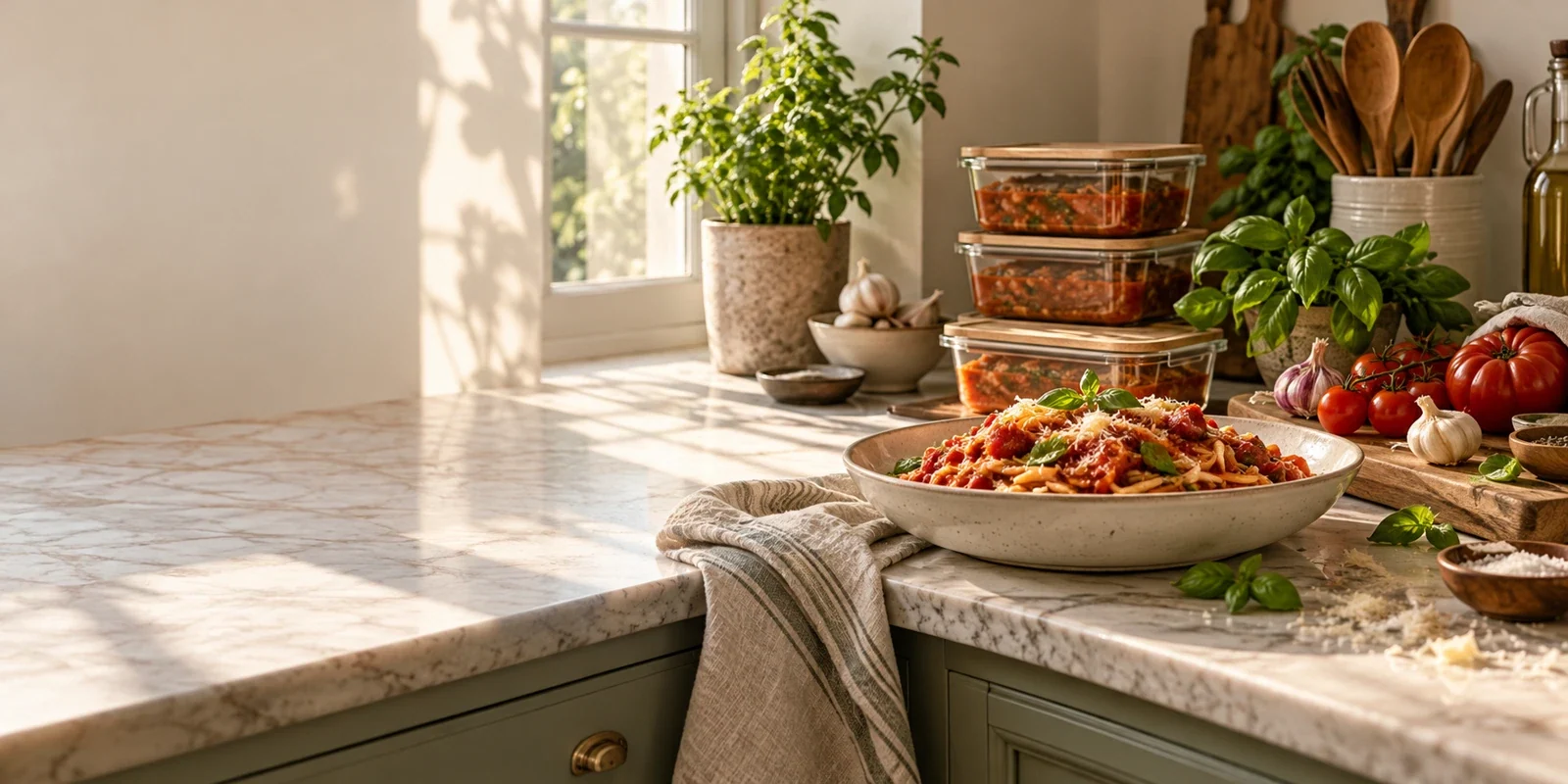
1. Check the fridge, freezer and cupboards first
Before writing a menu, look for fresh ingredients that need using, freezer portions and staple ingredients you already own. Plan one or two meals around them. This prevents buying duplicates and gives leftovers a purpose.
2. Plan around the week you actually have
Mark late finishes, sports, appointments and evenings when you're likely to eat out. Put your easiest meals on the busiest days and save longer recipes for times when cooking sounds enjoyable. It's fine to plan just five dinners and keep two nights flexible.
3. Reuse ingredients without repeating every meal
Choose dishes that share ingredients: peppers for fajitas and pasta, roast vegetables for dinner and lunch, or a batch of cooked rice for two different meals. Buying one larger pack often makes more sense than several small items, provided you'll use them safely.
4. Build your shopping list from the menu
Check what each recipe needs, subtract what's already in the house and group the remainder by shop section. Include breakfast, lunch and essentials rather than only dinner ingredients. Leave a little room for substitutions or offers that genuinely fit the plan.
5. Make a practical preparation plan
Identify anything you can do in advance: thawing food safely in the fridge, washing produce, portioning ingredients or preparing lunch boxes. Label and date prepared food, follow storage guidance and don't leave perishable ingredients unrefrigerated.
6. Review instead of starting from scratch
At the end of the week, note what everyone ate, what went unused and which meals were most convenient. Keep a short rotation of reliable favourites. The best meal plan is one you can sustain, not one that looks impressive online.
Keep your plan simple enough to update when circumstances change. A notebook, a document or a dedicated application can all work: the important part is using one reliable place for your information.
Looking for another idea? Browse the free planning guides.