
This guide is intended to help you organise your research and preparation. Rules and dates may change: always use the official application service and each university or college as the final authority.
01. Understand the three questions
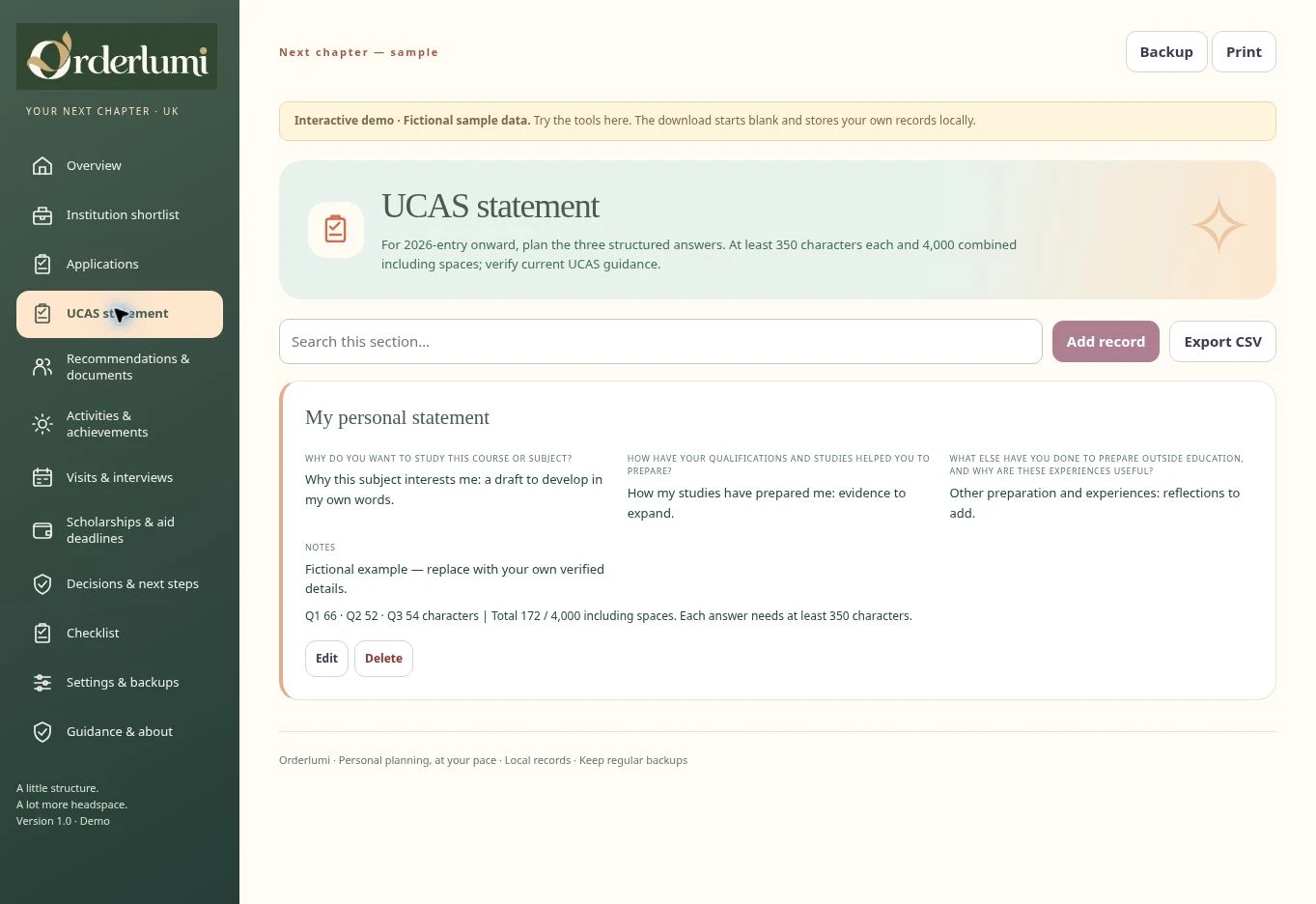
UCAS asks why you want to study the course or subject; how your qualifications and studies prepared you; and what else you have done outside formal education and why it matters. Each answer must contain at least 350 characters, with 4,000 characters overall including spaces. The answers are read as a whole, so avoid repeating the same evidence.
02. Start with evidence, not polished opening lines
Create an evidence bank: a concept that intrigued you, an investigation or project, books or articles you engaged with, an experience that changed your perspective and skills you developed. For each item, write what you did, what you learned and how it connects to your intended course. Prefer precise reflections to claims like ‘I have always been passionate’.
03. Question 1: explain genuine motivation
Show the questions or problems within the subject that interest you. For instance, a prospective engineering student could describe what a hands-on design problem revealed about trade-offs; a prospective history student might discuss contrasting interpretations of a source. Explain the connection to university-level study instead of reciting the course description.
04. Question 2: link learning to readiness
Pick meaningful examples from relevant school subjects, qualifications or independent academic projects. Describe how you interpreted evidence, solved a problem, communicated results or refined your approach. You do not need to list every qualification—the application records those elsewhere.
05. Question 3: show preparation beyond lessons
Consider reading, volunteering, work, caring responsibilities, clubs, competitions, creative work and independent exploration. What matters is the relevance and reflection, not the prestige of an activity. Explain what each example taught you and why that would help with the course.
06. Draft, cut and strengthen
Draft answers separately, then read all three together. Replace vague adjectives with examples. Remove repeated ideas, exaggerated claims and filler. Check the 350-character minimum in each answer and 4,000-character total, allowing space for final edits. Ask a teacher or adviser for critical feedback, but retain your own voice.
07. Consider multiple courses and specialist requirements
One statement generally serves your UCAS course choices, so find an honest shared academic thread where subjects differ. Check provider guidance for vocational or highly selective programmes; relevant placements, ethical awareness, admissions assessments or portfolios may also matter.
08. Use AI and examples responsibly
Use planning tools for brainstorming and proofreading, not for inventing achievements or submitting text that does not represent you. Avoid copying example statements. Make sure you understand and could discuss every claim in an interview.
09. Final submission checklist
Check spelling, accuracy, course relevance, specific evidence and transitions across the three answers. Confirm character counts in the actual UCAS form, obtain any reference required by your centre, and work to your school's internal deadline—not just the national one.
Official sources
More free advice
College and university application checklist · Compare offers · All guides