
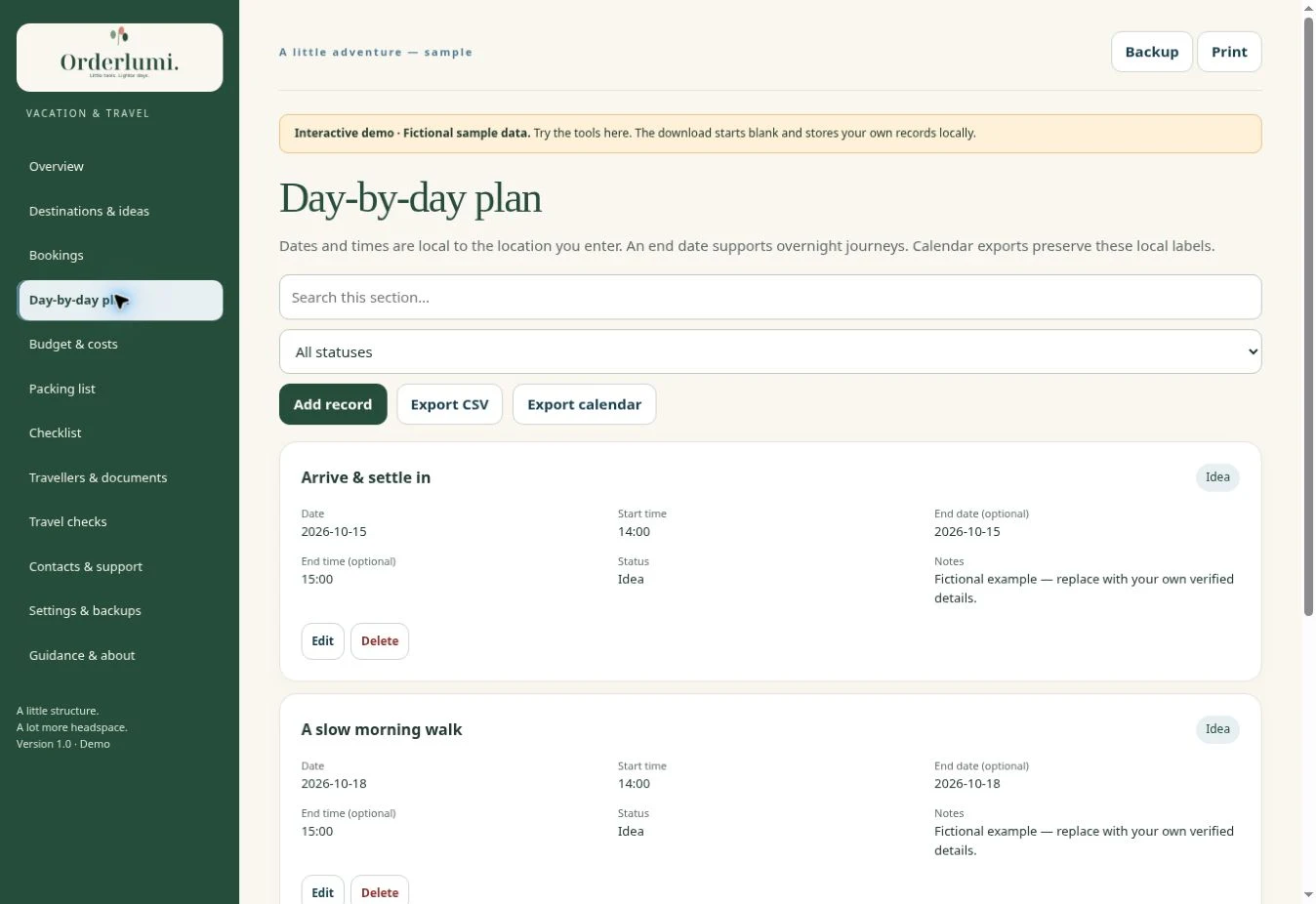
1. Choose the purpose of the trip
Decide whether the priority is rest, food, culture, sightseeing, family time or an active itinerary. Choosing two or three priorities makes decisions easier than trying to see everything.
2. Map the fixed commitments first
Add arrival and departure details, transport connections, booked attractions, accommodation check-in and non-negotiable events. Verify local time zones and booking conditions.
3. Cluster activities by area
Plan geographical groups rather than zigzagging across a city. Estimate travel conservatively and allow time for queues, meals and exploring on foot.
4. Build one anchor activity per day
Choose one major activity or reservation as the day's centre. Add one or two nearby optional ideas, leaving some time free.
5. Make a practical reservation list
Track confirmation numbers, deposit conditions, cancellation policies, meeting points and opening hours. Check official sites close to your visit because seasonal times can change.
6. Budget across the whole itinerary
Estimate transport, entrance fees, meals and incidental expenses. Leave a contingency for changes, rather than using the entire budget on planned activities.
7. Prepare an alternative for difficult days
Have indoor alternatives for bad weather, low-energy options for tired children and a plan for transport disruption.
8. Keep the plan accessible and revisable
Save a readable overview of each day, important addresses and booking references, with offline access to essentials where possible. A plan should help you enjoy the destination, not become a rigid timetable.
Requirements and conditions vary between travel providers and destinations. Check relevant official guidance before travel.