
1. Confirm administrative essentials
Check enrolment instructions, identity documents, course registration, timetable access, payment or aid steps and deadlines in your university portal. International students should verify visa and immigration instructions directly with official services.
2. Plan accommodation and move-in
Confirm the address, access arrangements, check-in time, inventory process, deposit conditions and what furniture is provided. Photograph the condition of a room when appropriate and retain key tenancy documents.
3. Pack for your actual living arrangements
Check what is permitted in the accommodation, including cooking equipment, electrical items and furniture. Prioritise bedding, everyday clothing, essential medication, chargers, course equipment and a few familiar items. Avoid buying duplicate appliances before meeting housemates.
4. Make a first-month financial plan
Map accommodation charges, transport, groceries, course supplies and one-off setup costs against the dates funds arrive. Keep a small emergency reserve where possible and know what hardship support your institution offers.
5. Set up your study systems early
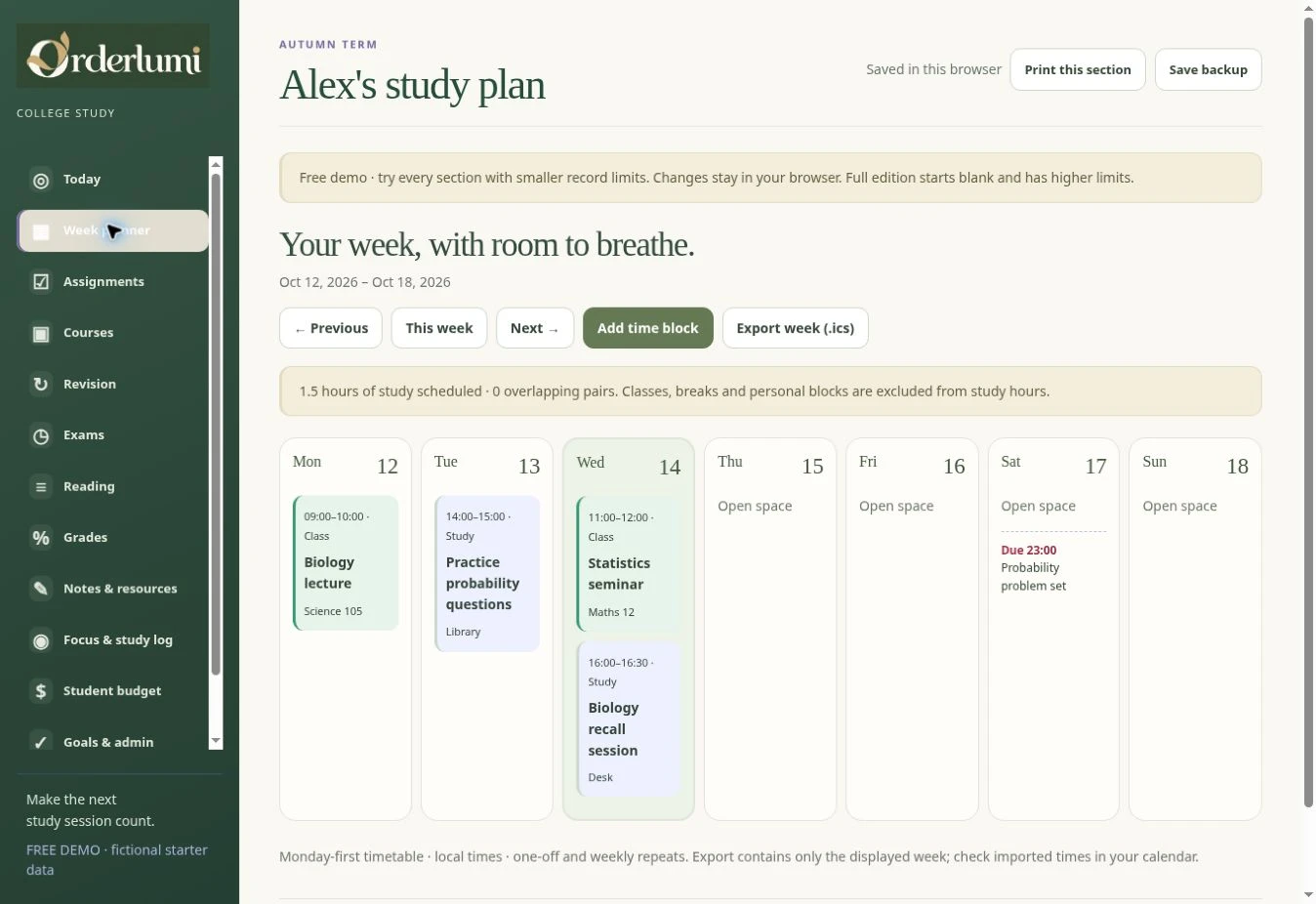
Find module handbooks, assignment portals, library facilities, accessibility services, office hours and assessment dates. Add real deadlines to a calendar, then build a weekly study routine with flexible blocks.
6. Create a manageable social plan
Join an orientation activity, introduce yourself to a few people and explore clubs or societies that genuinely interest you. Social adjustment varies; there is no requirement to become close friends with everyone immediately.
7. Know where support lives
Locate student wellbeing, academic advice, disability support, accommodation assistance and health services. Register with an appropriate local health provider where recommended, and keep emergency contact information accessible.
8. Review after the first fortnight
Ask what feels settled and what still causes friction. Adjust your weekly budget, timetable and routines, and seek help early if study demands or living arrangements are becoming difficult.
Use this guide as a flexible starting point. For course rules, welfare support or student funding, check the relevant institution and official regional services.
Explore more free Orderlumi planning guides or see the interactive planner.